

Table of Contents
- What Separates Best Quality Garden Hand Tools From Cheap Ones
- Garden Hand Tool Sets: What Belongs in a Starter Kit
- How to Find the Best Garden Trowel for Your Soil
- Best Hand Pruners for Gardening: Bypass vs. Anvil
- How to Clean Garden Tools and Keep Them Working
- Matching Tools to Soil Type, Hand Size, and Budget
- Frequently Asked Questions
Last Updated: October 14, 2026
What Separates Best Quality Garden Hand Tools From Cheap Ones
Walk into any garden center and you'll see two trowels that look almost identical. One costs a few dollars, the other costs several times more.
That gap comes down to two things: how the blade is made and how the handle attaches to it. A well-made set keeps working for a decade.
According to the U.S. Department of Agriculture's gardening resources, healthy soil is the foundation of any productive garden, and the tools you use to work it directly affect how well your plants establish.
Blade Material: Forged Steel vs. Stamped Steel
Forged steel is heated and shaped under pressure into a single solid piece. Stamped steel is cut from a flat sheet and bent into shape. Forged blades hold an edge longer and resist bending when they hit a rock.

Stamped tools aren't automatically bad. For light work in loose, sandy soil, a stamped trowel can last years. The problem comes with heavy clay or rocky ground, where a thin stamped blade bends and never quite straightens.
Look for the word "forged" on the packaging. If it isn't there, assume stamped.
Handle Construction and Grip
A handle fails in one of two places: where it meets the blade, or where your hand grips it.
- Wood handles (ash or hickory) absorb shock and feel warm in cold weather. They need occasional oiling to prevent cracking.
- TPR and rubberized grips reduce slipping when your hands are wet or muddy, which matters more than most buyers expect.
- Full-tang construction, where the steel runs the full length of the handle, is the strongest join you can buy.
What most guides miss is the ferrule, the metal band where handle meets blade. A weak ferrule is the single most common failure point on cheap trowels.
Garden Hand Tool Sets: What Belongs in a Starter Kit
A good starter kit covers five jobs: digging, planting, weeding, cultivating, and pruning. Anything beyond that is optional until you know what your garden actually needs.
For beginners, we recommend starting with a focused hand tool kit rather than a 20-piece box. Here's what earns its place, and what to compare before you buy.
Tools Every Beginner Actually Needs
- Trowel for planting and transplanting seedlings
- Hand fork for loosening soil and lifting weeds
- Cultivator (three-prong) for breaking up crusted soil between rows
- Bypass pruner for stems up to about a half-inch thick
- Garden gloves to protect your hands and improve grip
The 13-piece aluminum alloy garden tool set from Garden Gets bundles these core pieces with rustproof aluminum alloy construction and anti-slip TPR handles, which makes it a sensible first purchase if you'd rather not assemble a kit piece by piece.
Side-by-Side: What to Compare Before You Buy
Most guides tell you which tools to buy but never show you how the specs stack up. Use this comparison framework when you're standing in the aisle or reading a product page.
| Feature | What to Look For | Why It Matters |
|---|---|---|
| Blade material | Forged carbon steel or stainless steel | Holds an edge, resists bending on rocks |
| Blade thickness | 1.5-2.5 mm for trowels | Thicker resists flex; thinner digs faster in loose soil |
| Handle material | Ash, hickory, or TPR over full tang | Wood absorbs shock; TPR grips when wet |
| Handle length | 4.5-5.5 in for most adults | Longer = more leverage; shorter = more control |
| Overall weight | 6-10 oz per hand tool | Heavier digs better; lighter reduces fatigue |
| Ferrule | Welded or riveted metal band | Weak ferrules are the #1 failure point |
| Warranty | Lifetime on forged tools is common | Signals the maker expects it to last |
| Replacement parts | Springs, blades, grips sold separately | Extends life; cheap kits rarely offer this |
A common pattern is that a forged set outlasts three stamped sets over a decade. That math favors buying quality once.
What to Skip
Skip the novelty gadgets. Folding multi-tools with six attachments rarely do any single job well. Skip the cheapest pruners too; a dull bypass blade crushes stems instead of cutting them, which invites disease.
Value Over Time: Price vs. Lifespan
Sticker price tells you almost nothing. What matters is cost per season. A forged trowel that lasts ten years often costs less per year than a stamped one you replace annually. Apply the same math to pruners, where replaceable blades and springs can push a single pair past a decade of use.
When you compare kits, check three things: whether the blades are forged, whether the handles are full-tang, and whether the maker sells replacement parts. If all three are yes, the kit is worth the higher price.
How to Find the Best Garden Trowel for Your Soil
The best garden trowel depends on your soil, your hand, and how you garden. There's no single winner across every garden, and most guides stop at soil type. Hand size and grip matter just as much.
Match the Blade to Your Soil
In loose, sandy soil or container mixes, a narrow standard trowel works fine. In heavy clay, you want a forged blade with a sharp point that can slice through clods. In rocky ground, a wider, sturdier blade with a full tang resists bending.
| Soil Type | Blade Width | Best Feature to Look For |
|---|---|---|
| Sandy or potting mix | Narrow (2-3 cm) | Lightweight stamped or forged blade |
| Clay | Medium, pointed | Forged steel, sharp tip |
| Rocky or compacted | Wide, sturdy | Full-tang construction, strong ferrule |
| Raised beds | Standard | Comfortable grip, depth markings |
Measurements matter here. A blade that's too wide for your planting holes slows you down, and a handle too thick for your hand causes fatigue fast.
Match the Handle to Your Hand
This is the part most buying guides skip. Grip diameter, handle length, and overall weight determine whether you can work for an hour or five minutes.
13Pcs Garden Tool Set Aluminum Alloy Gardening Hand Tools Starter Kit →
- Grip diameter: Most adult hands fit a handle 1.0-1.25 in thick. A handle over 1.5 in forces the hand open and reduces grip strength. A handle under 0.75 in makes you squeeze harder, which causes blisters.
- Handle length: A 4.5-5.5 in handle gives most adults enough leverage without feeling unwieldy. Shorter handles favor control in tight raised beds; longer handles favor leverage in open ground.
- Weight: A 6-8 oz trowel is light enough for container work. An 8-10 oz trowel digs better in clay and rocky soil but tires the wrist faster.
- Left-handed users: Bypass pruners and some cultivators are handed. Look for ambidextrous or left-handed models rather than forcing a right-handed tool.
- Limited hand strength or arthritis: Ergonomic handles with a larger, softer grip and a forward-angled head reduce wrist strain. A padded grip and a lighter overall weight matter more than blade width.
A simple test: hold the tool as if you're digging. Your fingers should wrap around the handle with the thumb and middle finger nearly touching. If there's a gap, the handle is too thick. If your fingers overlap, it's too thin.
Depth Markings and Other Useful Details
Some trowels include depth markings on the blade, which speeds up planting bulbs and seedlings at consistent depths. A sharp tip matters more in clay than in sand. A wide, scooped blade moves more soil per scoop but is harder to control in tight spaces.
For raised beds and containers, a narrow trowel with a comfortable grip beats a wide one every time. For in-ground clay, a forged, pointed trowel with a full tang is the safer bet.
Best Hand Pruners for Gardening: Bypass vs. Anvil
The best hand pruners for gardening are bypass pruners for almost every live plant. Bypass blades cut like scissors, slicing cleanly through stems. Anvil pruners crush the stem against a flat surface, which damages living tissue.
Choose anvil pruners only for dead wood, where a clean cut doesn't matter.
A few details separate good pruners from frustrating ones:
- Replaceable blades and springs extend the tool's life for years
- A locking mechanism that stays locked in your pocket
- A grip sized to your hand, since pruners are used more than any other hand tool
For most gardeners, one quality bypass pruner beats three cheap ones. Sharpen it regularly and it will outlast everything else in your kit.
How to Clean Garden Tools and Keep Them Working
Knowing how to clean garden tools is the cheapest way to double their lifespan. Dirt and sap left on a blade cause rust, and rust destroys the edge you paid for.
The routine takes five minutes after each use:
- Scrape off caked soil with a stiff brush or old rag.
- Wipe blades with a lightly oiled cloth to block moisture.
- Sharpen pruners and trowels with a file or sharpening stone.
- Store tools dry, ideally hanging, not piled in a damp bucket.
According to Penn State Extension's guidance on tool care, cleaning tools between plants also limits the spread of soil-borne disease, so maintenance protects your garden as well as your equipment.
Matching Tools to Soil Type, Hand Size, and Budget
The right tool fits three things: your soil, your hand, and your budget. Get those aligned and you'll stop replacing tools every spring.
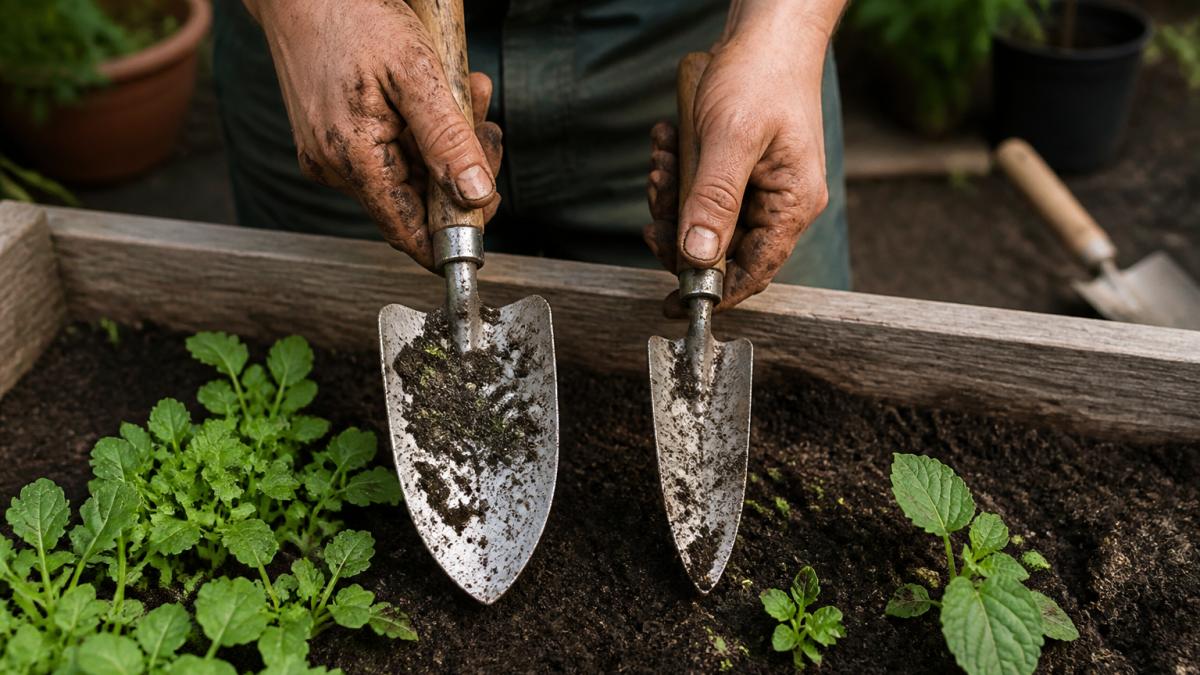
Hand size is the factor buyers overlook most. A handle that's too thick forces your hand open, which reduces grip and causes blisters.
On budget, think in cost per season rather than sticker price.
For a one-stop option, the Garden Gets starter kit covers the core tools with durable construction and comfortable handles, so you can spend your budget on plants instead of replacements.
Frequently Asked Questions
What should I look for when buying durable garden hand tools?
Check the blade material first. Forged steel holds an edge longer than stamped steel and resists bending. Look for a full-tang design, where the metal runs through the handle, and a secure connection between blade and handle. Handles should feel solid, not hollow. A tool like the 13Pcs Garden Tool Set from Garden Gets uses rustproof aluminum alloy and anti-slip TPR handles, which is a reasonable benchmark for durability in a starter kit.
Which garden hand tools work best in heavy or clay soil?
Clay soil is dense and sticky, so you need tools with narrow blades and strong steel. A hori-hori knife or a narrow-bladed trowel cuts through clay better than a wide one. Hand forks work well for breaking up clods. Avoid thin stamped blades, which bend under pressure. Forged steel cultivators and hand forks with wooden or reinforced handles give you the leverage to work heavy soil without damaging the tool.
How do you clean and maintain garden hand tools?
Scrape off soil after each use, then wipe blades with a damp cloth and dry them completely. Apply a light coat of oil to steel parts to prevent rust. Sharpen pruners and trowels once or twice a season with a file or sharpening stone. Store tools indoors or in a dry shed, not on damp ground. This routine takes a few minutes and can double the working life of your hand tools.
Do I need a full garden hand tool set or just a few pieces?
Start with a trowel, hand fork, and pruner. Those three cover planting, weeding, and pruning for most home gardens. A set makes sense if you want matching tools, a storage bag, or you are equipping a new gardener. The 13Pcs Garden Tool Set from Garden Gets includes digging, planting, loosening, and pruning tools, so it covers the basics plus extras like a weeder and gloves. Buy individual pieces if you already own some tools.
The challenge with garden hand tools isn't finding something that works this season. It's finding tools that still work five seasons from now. Garden Gets stocks durable hand tools and starter kits built around forged steel, comfortable grips, and construction that holds up to real digging. Browse our gardening tools and seed kits to build a set that lasts.