

Table of Contents
- How to Start an Indoor Herb Garden: What You'll Need First
- Best Herbs to Grow Indoors (and Which Ones Struggle)
- Growing Herbs in Pots Indoors: Containers, Drainage, and Potting Mix
- Indoor Herb Garden Lighting: Windows, Grow Lights, and Timers
- How to Water Indoor Herbs Without Drowning Them
- Planting, Feeding, and Harvesting for Continuous Growth
- Troubleshooting: Yellow Leaves, Pests, and Leggy Stems
- Frequently Asked Questions
Last Updated: October 13, 2026
How to Start an Indoor Herb Garden: What You'll Need First
Starting an indoor herb garden takes four things: the right spot, the right herbs, containers with drainage, and a light plan. Most beginners buy plants first and figure out the rest later. That order is backwards, and it's why so many supermarket basil pots die within two weeks. This guide from Garden Gets walks through setup in the order that actually works. Get the location and light right, and everything else gets easier.
Pick the Right Spot Before You Buy Anything
The best spot gets six to eight hours of bright light and stays away from heating vents. Watch your kitchen for a full day before you spend a dollar. Morning sun through a south-facing window beats an hour of harsh afternoon glare.
Check these before you commit:
- How many hours of direct sun does the sill get?
- Is there a heat or AC vent nearby?
- Can you reach the pots to water them daily?
- Is there a shelf or counter with room for three to five pots?
A common mistake is choosing a spot for looks instead of light. A pretty dark corner will not grow basil, no matter how good the pot looks.
Best Herbs to Grow Indoors (and Which Ones Struggle)
The best herbs to grow indoors are basil, mint, chives, parsley, and thyme. These tolerate average home conditions and keep producing through winter. Rosemary, oregano, and lavender need more light than most apartments get, so plan for a grow light if you want them.

The mistake most beginners make is treating every herb the same. Basil and rosemary have almost opposite needs. Basil wants steady moisture and moderate light; rosemary wants dry soil and blazing sun. If you water them on the same schedule, one of them dies.
Herb-by-Herb Care Chart
| Herb | Light (hours/day) | Water | Container | Notes |
|---|---|---|---|---|
| Basil | 6-8, bright | Keep soil lightly moist | 6 in., glazed or plastic | Pinch flowers to keep leaves sweet |
| Mint | 4-6, tolerates partial | Consistently moist | 6 in., keep isolated | Spreads by runners, one pot per plant |
| Chives | 4-6 | Moist but not soggy | 4-6 in., any | Regrows fast after cutting |
| Parsley | 4-6, partial sun OK | Moist | 6 in., deep pot | Slow to germinate from seed |
| Thyme | 6+, direct | Let dry between waterings | 4-6 in., terracotta | Drought-tolerant; hates wet feet |
| Rosemary | 6-8, direct | Dry out fully | 6 in., terracotta | Needs a grow light in most homes |
| Oregano | 6+, direct | Dry between waterings | 6 in., terracotta | Leggy without strong light |
| Lavender | 6-8, direct | Dry, gritty mix | 6 in., terracotta | Struggles in humid indoor air |
Beginner-Friendly Herbs That Tolerate Indoor Conditions
Start with these five:
- Basil grows fast and tells you clearly when it needs water, leaves droop, then perk up after a drink.
- Mint is nearly impossible to kill and spreads aggressively, so give it its own pot.
- Chives regrow after cutting and need less light than basil.
- Parsley handles partial sun and produces for months, though it's slow from seed.
- Thyme is drought-tolerant and forgiving of missed waterings.
Our German Winter Thyme seeds fit this list well. They're heirloom, non-GMO, and cold-hardy, and the packet comes with full growing instructions.
Herbs That Need More Light Than Most Apartments Get
Rosemary, oregano, and lavender want strong direct sun. In a typical apartment, they stretch toward the window and turn leggy. A grow light fixes this. Without one, expect weak growth and slow harvests. If you only have a north-facing window, skip these three and stick to the beginner list.
Grouping Herbs by Water Need
A simple way to avoid overwatering one plant and underwatering another is to group by thirst:
- Thirsty group: basil, mint, parsley, chives, water when the top inch is dry.
- Dry group: rosemary, oregano, thyme, lavender, water only when the pot feels light and the top two inches are dry.
Keep the two groups on separate shelves or opposite ends of the sill so you're not tempted to water them together.
Growing Herbs in Pots Indoors: Containers, Drainage, and Potting Mix
Every pot needs drainage holes and a saucer. Use a light potting mix, not garden soil from outside. Garden soil compacts in containers and holds too much water, which rots roots fast.
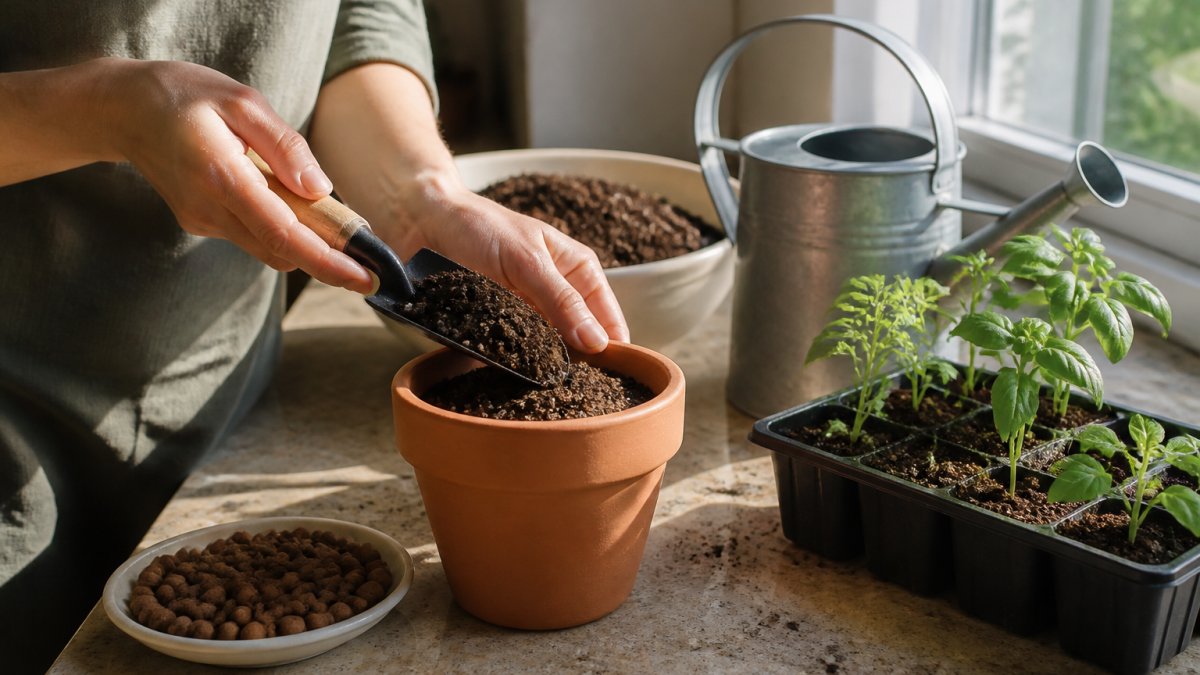
Pick pots 4 to 6 inches wide for single herbs. Glazed or recycled pots hold moisture longer, better for basil and parsley. Our Black and TerraCotta Eco Pots come in 4-inch and 6-inch sizes and are made from recycled plastic, stone powder, and wood dust.
Why Drainage Holes Matter More Than Pot Style
A pot without drainage holes traps water at the bottom. Roots sit in that water and rot. No pot style, no matter how nice it looks, is worth root rot. If you love a decorative pot with no holes, drop a smaller nursery pot inside it and empty the outer pot after watering.
Indoor Herb Garden Lighting: Windows, Grow Lights, and Timers
Indoor herb garden lighting decides whether your plants thrive or just survive. South-facing windows give the most light. East-facing windows work for chives, mint, and parsley. North-facing windows need a grow light for anything.
For low-light apartments, use a full-spectrum LED grow light. A simple clip-on or flexible strip light works for a small setup. Our LED Flexible Grow Light is water-resistant and runs 0.5 meters long, which suits a windowsill row of pots.
German Winter Thyme – 200 Seeds →

A light timer removes guesswork. Set it once and your herbs get consistent light every day, even when you forget.
How to Water Indoor Herbs Without Drowning Them
Water when the top inch of soil feels dry, not on a fixed schedule. Stick a finger into the soil before every watering. If it's damp, wait a day. Overwatering kills more indoor herbs than underwatering.
Signs You're Overwatering vs. Underwatering
| Symptom | Likely Cause | Fix |
|---|---|---|
| Yellow, limp leaves | Overwatering | Let soil dry out, check drainage |
| Crisp, brown leaf tips | Underwatering | Water more often, soak thoroughly |
| Mold on soil surface | Overwatering | Improve airflow, reduce watering |
| Slow growth, pale color | Too little light | Move to brighter spot or add grow light |
Planting, Feeding, and Harvesting for Continuous Growth
Plant seeds or starter plants in moist potting mix, then water gently. Feed herbs every two to four weeks with a diluted liquid fertilizer during active growth. Stop feeding in winter when growth slows.
Harvesting is where most indoor herb gardens either take off or stall. The rule that matters: cutting above a growth node, the point on the stem where leaves attach, signals the plant to branch. Cutting below it or stripping the whole stem signals the plant to stop.
Where to Cut Each Herb
- Basil: Pinch or snip just above a pair of leaves, leaving at least two nodes below the cut. New stems emerge from those nodes. Never take more than a third of the plant at once.
- Mint: Cut stems back to just above a leaf pair, or to about 2 inches above the soil if the plant is leggy. Mint regrows aggressively from any node.
- Chives: Snip individual leaves about 1 inch above the soil line. Never cut the whole clump at once, leave some leaves to keep the plant feeding itself.
- Parsley: Cut outer stems at the base, working from the outside in. The center crown keeps producing new growth.
- Thyme: Snip sprigs above a leaf pair, taking no more than a third of the plant. Thyme regrows slowly, so harvest lightly and often.
- Rosemary: Cut soft new growth, not the woody stems. Woody cuts rarely regrow.
How Often to Harvest
A common pattern is to harvest a little every week rather than a lot at once. Basil and mint can be cut weekly during active growth. Chives and parsley every 10 to 14 days. Thyme and rosemary every two to three weeks. Frequent light cuts keep plants compact and productive; infrequent heavy cuts leave them leggy and slow to recover.
Feeding Without Overdoing It
Feed herbs every two to four weeks with a diluted liquid fertilizer during active growth. Dilute to about half the label strength, indoor herbs in small pots are easy to overfeed, and excess fertilizer burns roots and pushes soft, flavorless growth. Stop feeding in winter when growth slows. If you repotted with a mix that already contains fertilizer, wait four to six weeks before the first feeding.
Starting From Seed vs. Starter Plants
Seeds are cheaper and give you more variety, but they're slower and less forgiving. Basil and chives germinate in about a week; parsley can take two to three weeks. Starter plants or cuttings skip the germination stage and give you something to harvest within weeks.
Want a fast start? Our Red Holy Basil seeds germinate in 70 to 80 days and make a striking, spicy addition to any indoor setup.

Troubleshooting: Yellow Leaves, Pests, and Leggy Stems
Yellow leaves usually mean too much water or too little light. Move the plant to a brighter spot and let the soil dry between waterings. If leaves stay yellow after a week, check the roots for rot.
Leggy stems mean the plant is stretching for light. Pinch the tops back and add a grow light. This forces side growth and a fuller shape.
Pests show up on indoor herbs too. Watch for:
- Aphids: small green or black clusters on new growth. Rinse them off with water.
- Spider mites: fine webbing under leaves. Raise humidity and wipe leaves.
- Fungus gnats: tiny flies around wet soil. Let the topsoil dry out.
Check under leaves once a week. Catching pests early is far easier than clearing an infestation.
Frequently Asked Questions
When should I start an indoor herb garden?
You can start an indoor herb garden any time of year since you control the light and temperature. Many gardeners begin seeds indoors 6-8 weeks before the last frost date, then move pots outside in spring or keep them inside year-round. If you want herbs for winter cooking, start in early fall so plants are established before daylight shortens. Buying starter plants instead of seeds shortens the timeline by several weeks.
Which herbs are easiest to grow indoors?
Basil, mint, chives, parsley, and thyme are the most forgiving for beginners. These herbs tolerate average indoor humidity and adapt to a sunny windowsill. Rosemary and oregano need more direct light and drier soil, so they suit growers with a south-facing window or a grow light. If you're new to indoor herb gardening, start with three or four easy herbs rather than a large collection.
How much light do indoor herbs need?
Most culinary herbs need six to eight hours of bright light daily. A south-facing window works for basil and mint, while thyme and rosemary prefer the strongest sun you can provide. In low-light apartments, a full-spectrum LED grow light running 12-16 hours on a timer fills the gap. Rotate pots weekly so all sides get even exposure and stems grow straight instead of leaning.
Can you grow herbs indoors all year?
Yes. Indoor herb gardens work year-round because you control temperature, light, and watering. Winter is the hardest season because natural light drops, so plan on a grow light from October through March in most climates. Keep plants away from heating vents and cold drafty windows. Perennials like thyme and chives can live for years in the same pot with occasional repotting and light pruning.
Indoor herbs reward consistency more than skill. Light, drainage, and a watering routine handle most problems before they start. Garden Gets stocks the tools to make that routine simple, including seed kits, eco-friendly planters, and LED grow lights built for small spaces. Shop the indoor herb collection and get your first pots growing this week.