

Table of Contents
- Start With a Plan: Budget, Climate, and Sequencing
- Eco-Friendly Backyard Ideas That Cut Waste and Water
- Native Plants and Pollinator Habitat: The Backbone of a Sustainable Backyard
- Water-Saving Landscaping: Drip Irrigation, Rain Barrels, and Rain Gardens
- Permeable Patio Ideas That Handle Stormwater Runoff
- Recycled Materials for Garden Projects: Planters, Mulch, and Reuse
- Lawn Reduction, Edible Gardens, and Low-Maintenance Upkeep
- Frequently Asked Questions
Last Updated: October 18, 2026
Start With a Plan: Budget, Climate, and Sequencing
A sustainable backyard renovation starts with three pre-purchase decisions: budget, climate, and work sequence.
Get the sequence wrong and you pay twice: rip out a lawn before planning beds and you stare at bare dirt for a season; build the patio before sorting drainage and runoff finds the low corner of your house.
What Renovations Actually Cost
Most homeowners underestimate by budgeting for materials alone; labor, earthwork, and disposal are typically half or more of a project total. The ranges below are for prioritization, not quotes.
| Project Type | Typical Range (USD) | Main Cost Drivers |
|---|---|---|
| Sheet-mulch a lawn section (DIY) | $50-$300 | Cardboard, wood chips, labor |
| Rain barrel installation (DIY) | $100-$400 | Barrel, stand, diverter, downspout modification |
| Rain garden (DIY, 100-200 sq ft) | $300-$1,500 | Excavation, soil amendment, plants |
| Drip irrigation retrofit (500 sq ft) | $200-$800 | Tubing, emitters, timer, filter |
| Permeable paver patio (200 sq ft) | $2,000-$8,000 | Base prep, pavers, edging, labor |
| Native planting bed (200 sq ft) | $500-$2,500 | Plants, compost, mulch, design |
| Raised bed vegetable garden (4x8 ft) | $150-$600 | Lumber or metal, soil blend, liner |
A practical split for a mid-size renovation: 40-50% hardscape and earthwork, 25-35% plants and soil, 15-25% tools, containers, irrigation, and contingency. Keep a 10% contingency line, drainage fixes are the most common overrun.
Sequence the Work in Six Phases
Here's the order most practitioners use:
- Assess and measure. Map sun exposure, slope, and where water pools after rain. Note downspout locations and the direction of runoff.
- Set a budget split. Decide the hardscape/planting/tools ratio before you shop, and hold a contingency line.
- Fix drainage and water first. Rain gardens, grading, and rain barrel placement come before planting because retrofitting them later means digging up finished beds.
- Build hardscape. Patios, paths, and edging set the footprint that beds and irrigation will work around.
- Amend soil and plant. Native and locally adapted plants go in once beds exist and irrigation is roughed in.
- Add containers, lighting, and decor last. These are cosmetic and easy to defer if the budget tightens.
| Phase | What Happens | Why It Comes Here |
|---|---|---|
| Assess and measure | Sun, slope, drainage mapping | Every later decision depends on it |
| Water and drainage | Rain barrels, rain gardens, grading | Cheap to do early, expensive to retrofit |
| Hardscape | Permeable patio, paths, edging | Sets the footprint for beds |
| Soil and planting | Compost, mulch, native plants | Needs finished beds to plant into |
| Finishing | Planters, solar lighting, decor | Cosmetic, easy to defer |
Adjust the Plan to Your Climate
Sequencing is universal; timing is not. Hot-summer climates: plant in early fall so roots establish before the first heat. Cold-winter climates: finish hardscape and drainage before the ground freezes, then plant in spring. Wet coastal climates: prioritize drainage and rain gardens before hardscape, because saturated soil under a patio heaves and settles.
Use your state extension service's regional planting calendars and species lists rather than national averages, which rarely match local rainfall and frost dates.
Eco-Friendly Backyard Ideas That Cut Waste and Water
The highest-impact eco-friendly backyard ideas are unglamorous: replace lawn with layered planting, capture roof water, mulch heavily, and reuse what you own.
Start with the biggest water consumer.
Then look at what leaves your property. Roof runoff, grass clippings, and fallen leaves are resources, not trash.
Three moves that pay back fastest:
- Sheet-mulch a lawn section with cardboard and wood chips to kill turf without chemicals.
- Redirect one downspout into a rain barrel or rain garden.
- Swap a mown strip for groundcover or a layered planting bed.
If you want the full picture of how these fit together, the EPA's guidance on landscaping and water efficiency is a solid, non-commercial starting point.
Native Plants and Pollinator Habitat: The Backbone of a Sustainable Backyard
The distinction matters. A plant native to your state but sourced several climate zones away may struggle.
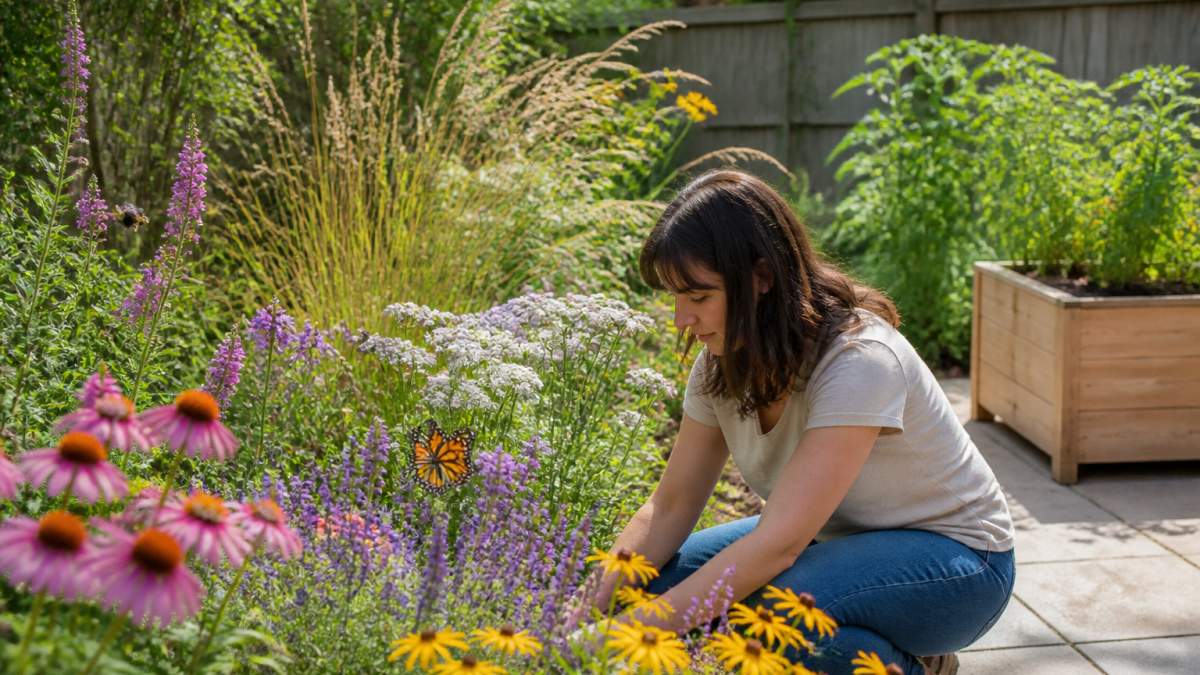
Layer planting in three tiers: low groundcover and flowering perennials in front, mid-height grasses and shrubs behind, and a small tree or large shrub for structure.
What most guides miss is bloom timing. The Xerces Society's pollinator planting guidance explains region-by-region plant selection without any sales pitch.
Water-Saving Landscaping: Drip Irrigation, Rain Barrels, and Rain Gardens
Drip irrigation beats overhead sprinklers on two counts: water goes to the root zone, and it doesn't evaporate mid-air on a hot afternoon.
A rain barrel at a downspout captures roof runoff you'd otherwise lose.
A rain garden is a shallow, planted depression that holds stormwater long enough to infiltrate.
| Feature | What It Does | Best Placement |
|---|---|---|
| Drip irrigation | Waters roots directly, cuts evaporation | Planting beds and containers |
| Rain barrel | Captures roof runoff for reuse | Under a downspout, on a stand |
| Rain garden | Slows and infiltrates stormwater | Low spot fed by runoff, away from foundation |
For current guidance on rainwater capture and local rules, check your state's extension service or the EPA's rainwater harvesting resources before you install.
18" Natural Solid Wood Indoor Outdoor Square Planter Box →
Permeable Patio Ideas That Handle Stormwater Runoff
Permeable patio ideas let rain pass through the surface instead of sheeting off, reducing runoff and easing pressure on drainage. The right pick depends on soil and slope.
The practical choices for a backyard patio:
- Gravel or crushed stone with a stabilized binder. Cheapest, drains freely, and handles irregular shapes well.
- Permeable pavers with open joints and a gravel base. More finished look, needs proper sub-base prep.
- Permeable grid systems planted with groundcover. Good on gentle slopes.
Skip solid concrete and artificial turf if drainage is a concern. Both shed water, and artificial turf in particular gets uncomfortably hot in sun.
Recycled Materials for Garden Projects: Planters, Mulch, and Reuse
Recycled materials for garden projects stretch a budget and keep usable material out of the waste stream. The best sources are often already on your property: broken concrete, salvaged brick, old timber, and yard waste.
Yard waste is the most underused material in most backyards: leaves, clippings, and prunings become mulch or compost within a season, and a simple bin turns scraps into soil amendment for the cost of the bin.
For containers, look for recycled-content options. Our Black and TerraCotta Eco Pots are made from a blend of recycled plastic, stone powder, and wood dust, and each one has a slightly different appearance because of how the materials blend.

Broken concrete makes excellent retaining walls and path edging, salvaged brick works for borders, and untreated pallets become compost bins or vertical planters.
Lawn Reduction, Edible Gardens, and Low-Maintenance Upkeep
Lawn reduction, edible gardens, and low-maintenance upkeep make a sustainable backyard easier to live with over time. Each trades upfront effort for less work later, so choose on lifecycle cost, not installation price.
Compare Groundcover Options Over Time
Replacing lawn doesn't mean paving it over. The real decision is which groundcover you can live with for a decade:
| Option | Upfront Cost (per 100 sq ft) | Annual Upkeep | Lifecycle Notes |
|---|---|---|---|
| Sheet-mulched bed with native groundcover | $150-$600 | Low after year two | Mulch top-up twice a year; plants may need division every 3-5 years |
| Clover or microclover lawn | $50-$200 | Moderate | Overseed bare spots annually; stays green with less water than turf |
| Permeable gravel or crushed stone | $200-$800 | Low | Occasional raking; weed pressure in joints |
| Artificial turf | $800-$2,500 | Low labor, high replacement | Replaced every 8-15 years; gets hot in sun; sheds water |
| Native sedge or buffalo grass | $300-$900 | Low | Slow to establish; mow once or twice a season |
Artificial turf looks low-maintenance on paper but carries a replacement cost most living groundcovers never match. Living groundcover improves soil and supports pollinators; turf does neither. For most yards, a layered native bed costs less over ten years and does more ecological work.
Make the Edible Garden Earn Its Space
An edible garden earns its space when it produces reliably and doesn't demand more water than the lawn it replaced. Fruit trees, a vegetable bed, and herbs near the kitchen door give something back, and raised beds make soil control easier on your back.
Budget for soil: a 4x8 ft raised bed needs roughly half a cubic yard of soil blend, and replacing tired soil every few years is a real cost.
Build a Maintenance Calendar That Matches the Season
Maintenance is where sustainable yards win or lose. For the weeding itself, our 38.97in Aluminum Weed Puller has a long rod so you work upright, and its 3.15-inch aluminum claws with serrated teeth pull dandelions, crabgrass, chickweed, and thistle.
| Task | How Often | Why It Matters |
|---|---|---|
| Top up organic mulch | Twice a year | Cuts watering and weed pressure |
| Check drip emitters | Each spring | Clogs waste water silently |
| Empty and screen rain barrel | Monthly in season | Prevents mosquito breeding |
| Pull weeds before seeding | Weekly in spring | Stops next year's crop |
| Turn compost | Every few weeks | Speeds finished soil |
| Divide perennials | Every 3-5 years | Keeps beds vigorous and free to expand |
| Refresh raised bed soil | Every 2-3 years | Replaces nutrients and improves drainage |
For structure and seating areas, a natural teak planter anchors a corner without needing paint or sealant. Our 18" Natural Solid Wood Square Planter Box measures 20 inches high by 18 inches wide by 18 inches deep and works indoors or out.

Lighting finishes the space and costs nothing to run if it's solar. Our Solar Powered Parrot Garden Light charges by day and switches on automatically at dusk, which is one less thing to remember.

Frequently Asked Questions
How do I make my yard more eco-friendly on a budget?
Start with the changes that cost the least and do the most: replace part of your lawn with native groundcover, set out a rain barrel under a downspout, and mulch beds with organic material instead of buying bagged product. Reuse what you already have, such as containers and pavers, before buying new. A phased plan spread across two or three seasons keeps each step affordable, and a sustainable backyard improves gradually rather than in one expensive weekend.
Which landscaping changes help conserve water the most?
Water-saving landscaping works best in layers. Switch sprinklers to drip irrigation so water reaches roots instead of pavement, group drought-tolerant plants by water need, and add 2 to 3 inches of organic mulch to slow evaporation. A rain barrel or rain garden captures stormwater runoff for reuse. Replacing thirsty lawn with groundcover or xeriscaping cuts demand further. Together these steps reduce water use noticeably while keeping beds healthy through dry spells.
What materials are best for a sustainable backyard renovation?
Look for materials that are durable, locally sourced, or reclaimed. Permeable pavers and gravel let stormwater soak in rather than run off. Recycled-content pots, such as the Black and TerraCotta Eco Pots made from recycled plastic, stone powder, and wood dust, keep waste out of landfills. Solid teak planters like the 18-inch square planter box last for years, so you buy once. Organic mulch and compost feed soil health instead of relying on synthetic inputs.
How can I create a low-maintenance, eco-friendly backyard?
Reduce the lawn, choose native and locally adapted plants suited to your climate, and group them by water needs so one irrigation schedule fits. Layered planting shades soil and crowds out weeds. A stand-up weeder, such as the 38.97-inch aluminum weed puller, removes dandelions and crabgrass without bending or spraying. Add solar lights for evening use and skip high-input features. Fewer moving parts means less yard maintenance and a more climate-resilient yard over time.
A sustainable backyard renovation is a sequence, not a shopping list, and the order you do things in decides whether the result holds up. Garden Gets stocks the tools and containers that make each phase easier, from eco pots made with recycled materials to a stand-up weeder that saves your back. Shop Garden Gets for planters, garden tools, and decor, and build the yard in the order that lasts.