

Table of Contents
- Start With the Seller: How to Vet Best Online Plant Nurseries
- How to Choose Plants for Your Garden Before You Add to Cart
- Read the Listing Like a Pro: Photos, Sizes, and Root Systems
- Online Plant Shipping and Packaging: What Good Looks Like
- The Plant Nursery Return Policy: Read It Before You Pay
- Delivery Day: Unboxing, Acclimation, and Pest Prevention
- Know the Rules: Shipping Restrictions and Total Cost
- Conclusion
- Frequently Asked Questions
Last Updated: October 19, 2026
Start With the Seller: How to Vet Best Online Plant Nurseries
Buying plants online starts with the seller, not the plant. A healthy specimen from a careless shipper arrives dead. A modest plant from a careful one arrives thriving. So vet the nursery first.
The USDA's plant health inspection guidance makes one thing clear: moving live plants carries real risk, and responsible sellers manage it. Here is how to spot one.
A 7-point seller-vetting checklist
Run every nursery through this list before you spend a dollar:
- Physical address and phone number listed on the site
- Shipping policy that names carriers, timelines, and weather holds
- Live arrival guarantee written in plain language
- Customer reviews you can read off-site, not just testimonials on their own page
- Clear plant sizes in inches or pot diameter, not vague words
Miss two or more, and keep shopping.
How to Choose Plants for Your Garden Before You Add to Cart
Match the plant to your space before you fall in love with the photo.
Start with your growing zone. The USDA Plant Hardiness Zone Map tells you the coldest temperatures your area reaches.
Then check three things:
- Light: Does the spot get bright indirect light, low light, or full sun?
- Humidity and heat: Will the plant survive your indoor air in winter?
- Space: How large does the plant get at maturity?
For apartment dwellers, a trailing plant like Pothos 'Manjula' ($26.99) suits bright, indirect light and stays manageable in a small room.
Not sure what you want? Our Mystery House Plant ($14.99) lets our plant experts pick an in-season, healthy houseplant for you.

Read the Listing Like a Pro: Photos, Sizes, and Root Systems
A listing is a contract. Read it like one.
Product photos tell you a lot. Ask yourself: are these actual photos of the plant you'll receive, or a stock image?
Then look for size. Good listings give pot diameter and plant height. Vague listings say "medium" and leave you guessing.
Root system details matter most for bare-root plants. A healthy bare-root order should arrive with firm, plump roots, not dry and brittle ones.
Online Plant Shipping and Packaging: What Good Looks Like
Good plant shipping protects three things: moisture, temperature, and movement. A seller who gets all three right rarely loses a plant in transit. But the part most guides skip is what happens after the box leaves the nursery, and that is where buyers lose money.
Here's what to look for in a shipping policy:
- Carrier and speed: Two to four days is typical for live plants. Longer means more stress.
- Packaging method: Moist paper around roots, sturdy pots, and padding that stops the plant from shifting.
- Weather holds: A good seller pauses shipments during extreme heat or cold.
- Order tracking: You should get a tracking number, not silence.
Choose the shipping speed, not just the plant
Shipping speed is a cost-versus-risk decision, and the right answer depends on the species and the season.
- Standard ground (typically 3-5 business days): Fine for hardy houseplants, succulents, and dormant bare-root stock in mild weather. Cheapest option, highest transit stress.
- Expedited (typically 2-3 business days): Worth the upcharge for tropicals, flowering plants in bud, and anything shipping into a heat wave or cold snap.
- Overnight: Rarely necessary for plants and usually the most expensive line on the invoice. Reserve it for high-value or time-sensitive orders.
A common pattern is that the plant price is the smallest part of the decision. A $15 plant with five days in a hot truck and no guarantee is a worse buy than a $30 plant that arrives in two days with a live arrival guarantee.
Track the package and plan for failure
A tracking number is not a formality, it is your early-warning system. Watch for these signals:
- A scan gap of more than 24 hours during transit often means the box is sitting on a dock or in a trailer. In extreme temperatures, contact the seller before delivery.
- A delivery exception (weather, address issue, refused delivery) is the moment to call the carrier and the seller the same day.
- A box left in direct sun or on a hot porch can cook a plant in hours. Arrange for someone to receive it or use a hold-at-location option if the carrier offers one.
If a delivery fails or the box arrives late, document everything immediately:
- Photograph the box before opening it, including the label and any visible damage.
- Photograph the plant inside the packaging, then out of it.
- Note the delivery timestamp from the carrier's tracking page.
- Contact the seller within the claim window, often 24 to 72 hours, with photos and the tracking number.
Weather, heat packs, and cold packs
Temperature is the silent killer. A plant that sits in a freezing truck overnight may look fine, then decline a week later.
Ask whether the nursery uses heat packs in cold months and cold packs in hot ones. Sellers who ship year-round without weather protection are gambling with your money. A seller who offers a weather hold, pausing shipment until conditions improve, is telling you they have shipped through a bad season before.
Mystery House Plant - 3" Pot →
Packaging that survives the trip
The best packaging is boring: a pot secured so it cannot rotate, roots wrapped to hold moisture without soaking, and void fill that keeps the plant from sliding. Look for sellers who describe their method in plain language. If the shipping page says only "carefully packed," ask what that means before you order.
The Plant Nursery Return Policy: Read It Before You Pay
The return policy is where trust is won or lost. Read it before checkout, not after a problem.
A fair policy covers:
- Live arrival guarantee: dead or damaged plants replaced or refunded
- Claim window: how many days you have to report a problem, often 24 to 72 hours
- Photo requirement: most sellers ask for pictures of the damage
- Refund vs. replacement: which one they offer, and whether you choose
Delivery Day: Unboxing, Acclimation, and Pest Prevention
Open the box the day it arrives. Then inspect, water if needed, and isolate the plant for a week or two before placing it near your other plants.
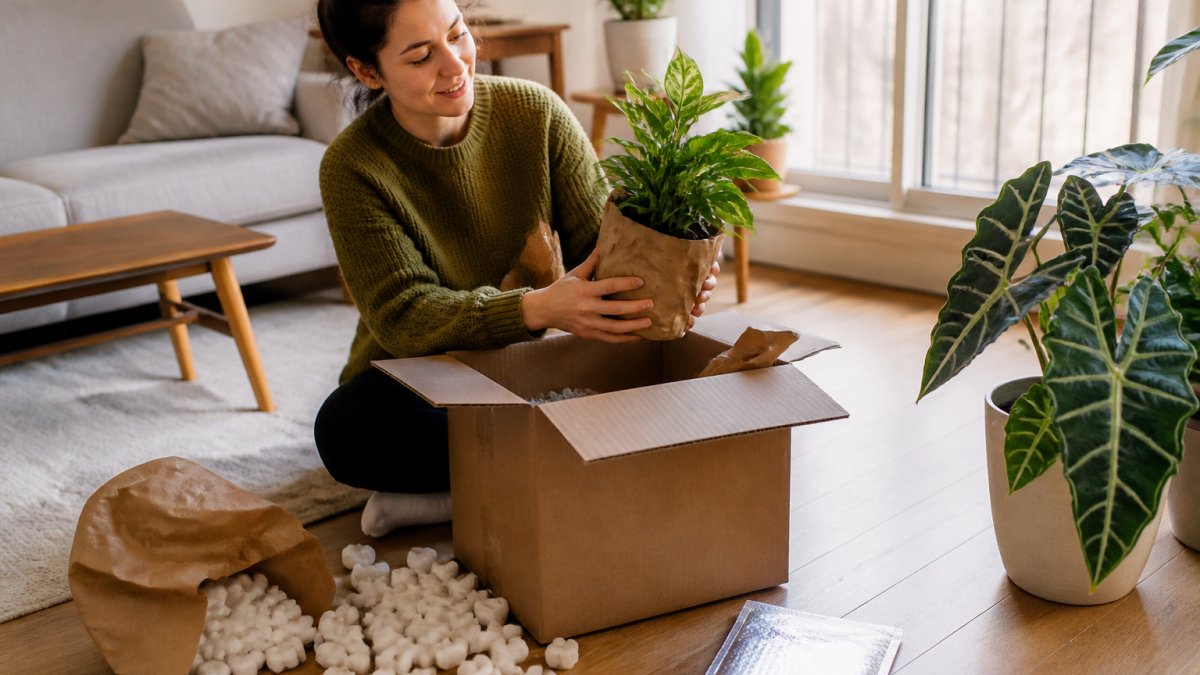
Unboxing steps that protect your plant:
- Open outdoors or over a sink to contain loose soil and packing material.
- Check the soil: dry means water lightly; soggy means let it dry out.
- Inspect leaves and stems for damage, spots, or pests.
- Look under the leaves for tiny insects or webbing.
- Isolate the plant for one to two weeks away from your collection.
Acclimation is simple: give the plant bright, indirect light and steady temperatures for a week. Skip fertilizer at first. The plant is recovering from travel.
Pest prevention matters. A single infested plant can spread to your whole collection, so a short quarantine is cheap insurance.
Know the Rules: Shipping Restrictions and Total Cost
Two things decide whether an online plant order is a good deal: whether it can legally reach you, and what it actually costs once every line item is added. Most buyers check neither until something goes wrong.
Shipping restrictions you should check before checkout
Some plants cannot legally ship to certain states. Agricultural rules restrict species that could carry pests or become invasive, and the USDA Animal and Plant Health Inspection Service publishes the details.
Common categories that trigger restrictions include:
- Citrus and other fruit trees, which face state-level quarantine rules in many areas.
- Certain grasses and noxious weeds, which are regulated to prevent spread.
- Bare-root stock and soil, which can carry pests and pathogens that potted, soilless plants do not.
- Imported plants, which may require permits or phytosanitary certificates.
A seller who flags restricted states at checkout is doing it right. If a seller ships anything anywhere with no mention of restrictions, treat that as a warning sign about their pest protocols too.
Biosecurity: protect the collection you already have
A shipped plant is a potential carrier. Pests and pathogens travel in soil, on leaves, and in packing material, and a single infested order can spread through an entire collection.
A practical quarantine routine:
- Unpack away from your other plants, outdoors, in a garage, or over a sink you can clean.
- Inspect the leaves, stems, and soil surface for insects, webbing, sticky residue, or lesions.
- Isolate the plant for one to two weeks in a separate room, away from your collection.
- Wash your hands and clean your tools after handling a new arrival.
- Dispose of packing material in a sealed bag rather than reusing it around your plants.
The real cost of an online plant
The sticker price is only the first line. Add up the full invoice before you decide a plant is a bargain:
| Cost item | What to check |
|---|---|
| Plant price | Listed price per pot size |
| Shipping | Flat rate or weight-based |
| Weather protection | Heat or cold pack fees |
| Replacement risk | Cost of a lost plant |
Then compare like with like. A larger pot size, a heat pack, and a live arrival guarantee can add real dollars to a cheap listing, while a slightly higher sticker price with free shipping and a replacement guarantee can be the better value. Judge the delivered plant, not the listing photo.
Conclusion
Buying plants online rewards patience and a little homework. Vet the seller, match the plant to your space, read the listing, and open the box fast.
Browse our house plant selection, from the Mystery House Plant to Pothos 'Manjula', and start your next order with confidence.

Frequently Asked Questions
What should I look for when buying plants online?
Check three things before you pay: the seller's reviews and reputation, the listing's actual photos and stated plant size, and the shipping method and timeline. Look for a clear plant nursery return policy and a replacement guarantee for shipping damage. Confirm the plant fits your growing zone and light conditions. A seller who publishes specific pot sizes, root system details, and delivery windows is usually more reliable than one with vague descriptions.
How can I tell if an online plant seller is reputable?
Read recent customer reviews for mentions of plant condition on arrival, packaging quality, and how the seller handled problems. Check whether the seller posts actual photos of the plants they ship rather than stock images. Look for a named return policy and a stated shipping method. A seller who answers questions about plant size, soil type, and delivery timing before you order is a good sign. Avoid sellers with no policy pages and no recent feedback.
What should I do when my plants arrive in the mail?
Unbox within a few hours and inspect the plant for broken stems, yellowing leaves, and pests. Photograph the plant and packaging before you discard anything, since most sellers require photos for a claim. Water lightly if the soil is dry, then place the plant in bright, indirect light away from direct sun. Skip fertilizing for the first few weeks. Most plants need a week or two of acclimation before they settle into a normal care routine.
What is the best time of year to order plants online?
Spring and early fall are the safest windows in most of the country. Temperatures are moderate, so plants handle transit better and shipping damage is less likely. Summer heat can stress plants in a delivery truck, and winter cold can kill tropical houseplants without a heat pack. If you order in extreme weather, ask the seller whether they hold shipments or add a heat pack or cold pack. Check your growing zone before ordering.